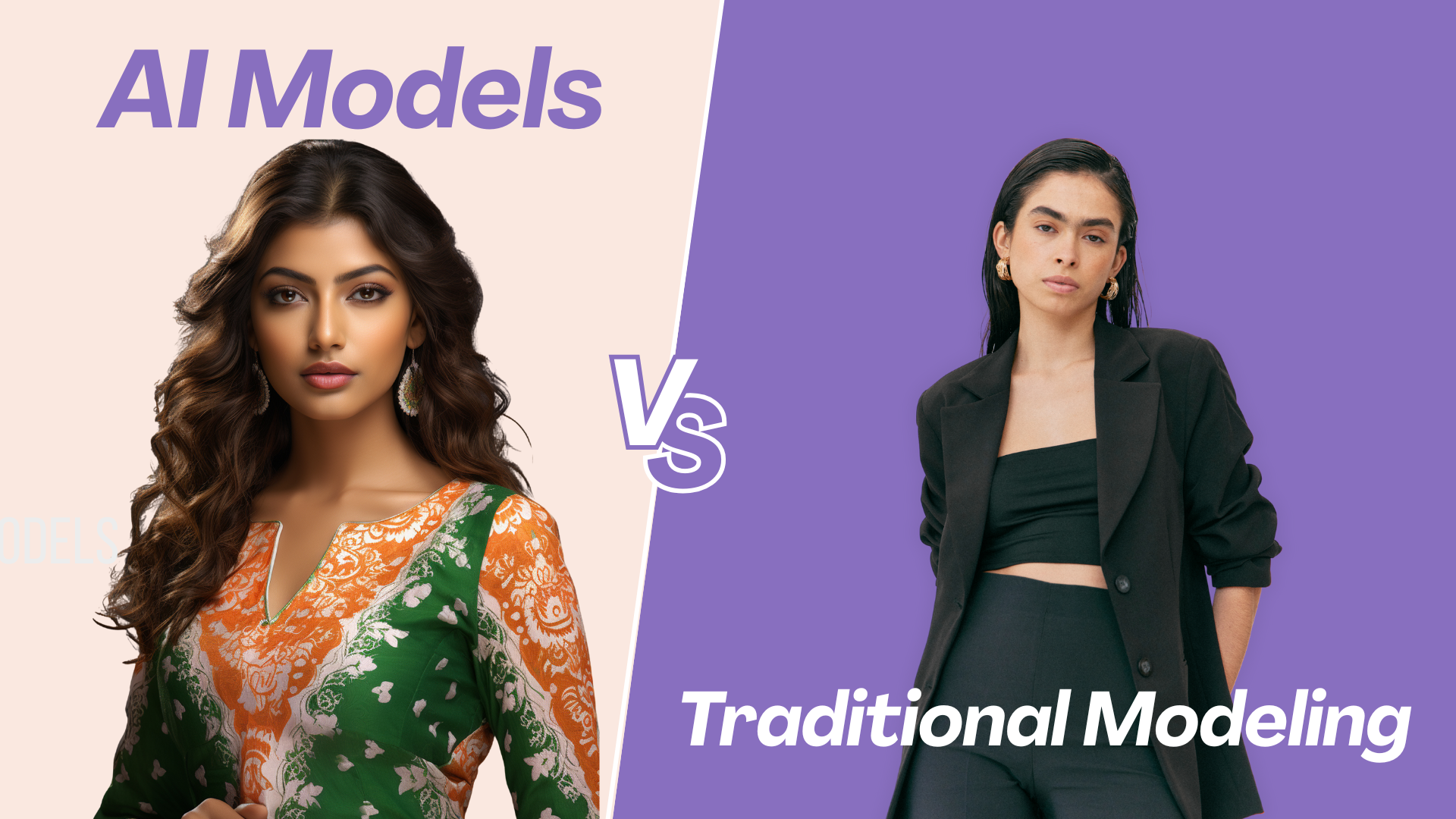
The entertainment and fashion industries in India are currently witnessing a seismic shift that is redefining the very concept of a “model.” You may have seen them scrolling through your Instagram feed. They are the flawless influencers who never sleep, never age, never miss a flight, and never have a bad hair day. They are AI-generated models, and they are rapidly changing the face of fashion, advertising, and content creation across the subcontinent.
From virtual stars like Kyra and Naina Avtr to the emerging technology of “digital twins,” artificial intelligence is reshaping how brands hire talent and execute campaigns. This technological wave brings with it a mix of excitement and anxiety for human talent. What does this mean for you, the aspiring model, actor, photographer, or makeup artist? Is the runway disappearing, or is it simply evolving into a new format?
In this comprehensive deep dive, Dazzlerr breaks down the rise of AI in the Indian modeling ecosystem. We will explore the economics driving this change, the legal landscape protecting your rights, the ethical dilemmas regarding body image, and provide a strategic roadmap for how you can future-proof your career in 2025 and beyond.
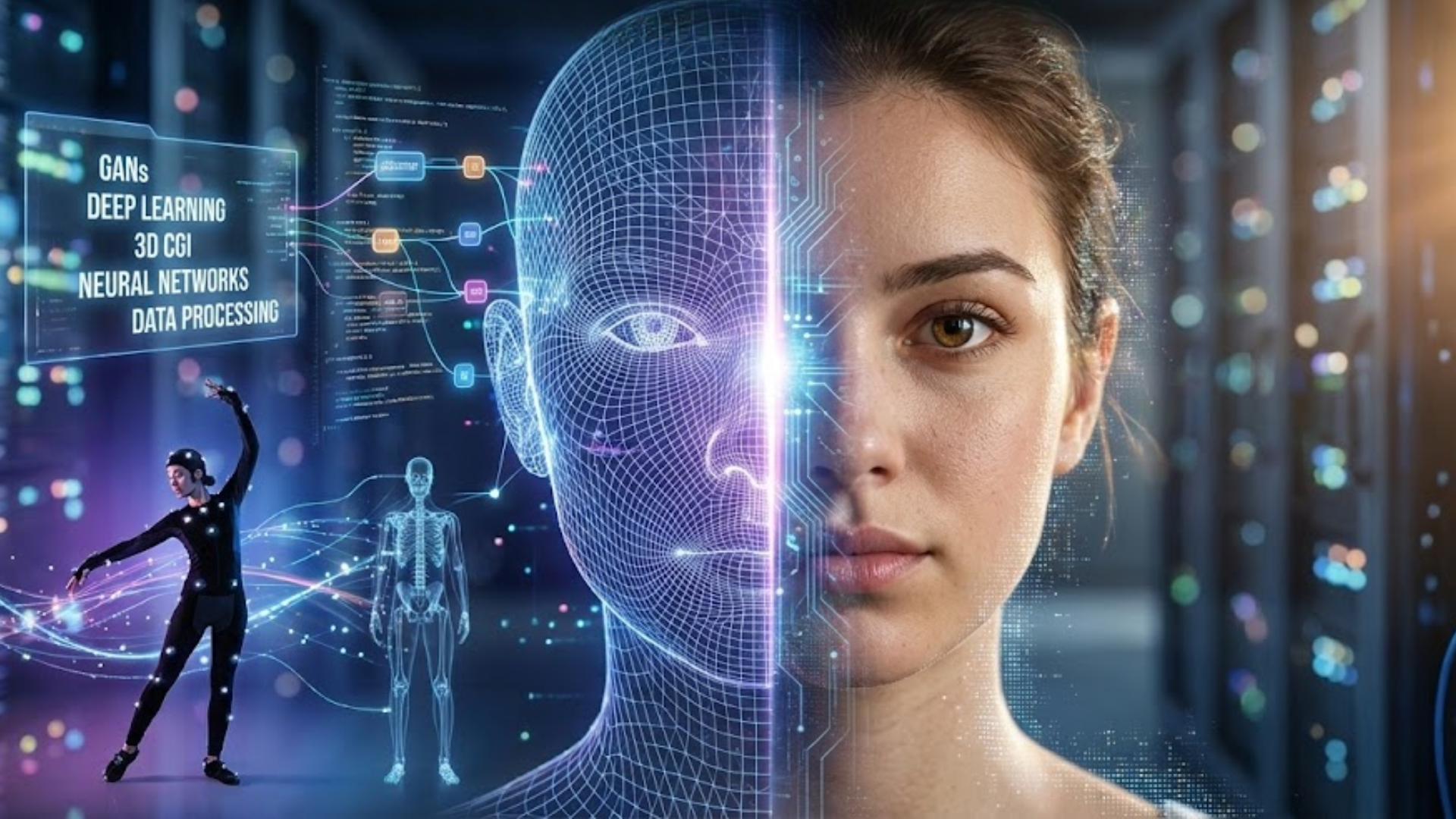
What Are AI-Generated Models?
It is crucial to first understand exactly what we are discussing. AI-generated models are not merely simple cartoons, filters, or photoshopped images. They are hyper-realistic, computer-generated personas created using a sophisticated stack of technologies. These include advanced deep learning algorithms, generative adversarial networks (GANs), 3D CGI design software like Unreal Engine and Maya, and motion capture technology.
Unlike static avatars or video game characters of the past, these virtual influencers are designed to have distinct personalities, detailed backstories, unique fashion senses, and the ability to engage with fans in real-time.
The Technology Behind the Faces
To understand the threat and the opportunity, one must look under the hood. Creating a high-fidelity AI model involves a convergence of multiple artistic and technical disciplines.
- 3D Modeling and Sculpting: Artists use software like ZBrush or Maya to sculpt the digital clay. They painstakingly create pore-level details, skin textures, and hair strands to ensure the model survives the “uncanny valley,” which is the unsettling feeling users get when a robot looks almost but not quite human.
- Motion Capture (MoCap): For realistic movement, studios often use suits with sensors worn by real humans. The data from these sensors drives the digital skeleton of the AI model. This is where the lines blur, as human movement is still the gold standard for grace and natural flow.
- Generative Adversarial Networks (GANs): This is a form of AI where two neural networks compete with each other in a game. One creates an image, and the other judges it against real data. Over millions of iterations, the AI learns to generate photorealistic faces that have never existed in the real world.
The Spectrum of Digital Talent
Understanding the competition is the first step to navigating it. AI models generally fall into three categories:
- Fully CGI Influencers: These are characters created entirely from scratch using 3D software. They do not exist in the physical world. Their movements, voice, and appearance are all synthesized. They are often managed by creative studios that script their entire lives.
- Hybrid Models: This is a common and rapidly growing format in India. These characters often use a real human body double for movement and posing, but the face is replaced or generated using proprietary AI face-swap technology. This allows for fluid, realistic movement that pure CGI sometimes struggles to capture. The “body” gets paid, but the “face” is digital.
- Generative AI Images: These are static images created by tools like Midjourney, Dall-E 3, or Stable Diffusion. They are often used for catalogue work, mood boards, or fast-fashion advertising where a specific, consistent “character” is not required across multiple images.
The New Stars of India
India has surprisingly emerged as a global hotbed for this innovation. Several virtual influencers are already commanding massive followings and securing major brand partnerships that would traditionally go to human models.
- KYRA (@kyraonig): Launched in January 2022 by FUTR Studios, Kyra is arguably India’s first major success in this space. Positioned as a 21-year-old “dream chaser” from Mumbai, she has amassed over 273,000 followers on Instagram. Her feed is indistinguishable from a top fashion blogger, featuring high-end travel locations, yoga sessions, and collaborations with major lifestyle brands like Boat and Pepsi. She was created using 3D sculpting to capture distinctive features, ensuring she looks photorealistic rather than robotic.
- NAINA AVTR (@naina_avtr): Created by Avtr Meta Labs, Naina represents the next evolution of the hybrid model. She is a fictitious 22-year-old from Jhansi who has captured the imagination of over 374,000 followers. Naina stands out because she uses real actors for body movement while AI technology provides her consistent facial features. In November 2025, she broke new ground by debuting as India’s first AI actor in a microfilm. This demonstrated that virtual talents can now handle complex emotions, dialogue, and acting roles previously thought to be the exclusive domain of humans.
- Other Emerging Names: The ecosystem is expanding rapidly with niche avatars. Virat Krishnan positions himself as an “AI Luxe curator,” focusing on the luxury market. Sravya, another creation from FUTR Studios, showcases the speed of generative AI creation. Tia Sharma, another digital personality, focuses on regional fashion trends, proving that AI can be culturally specific.
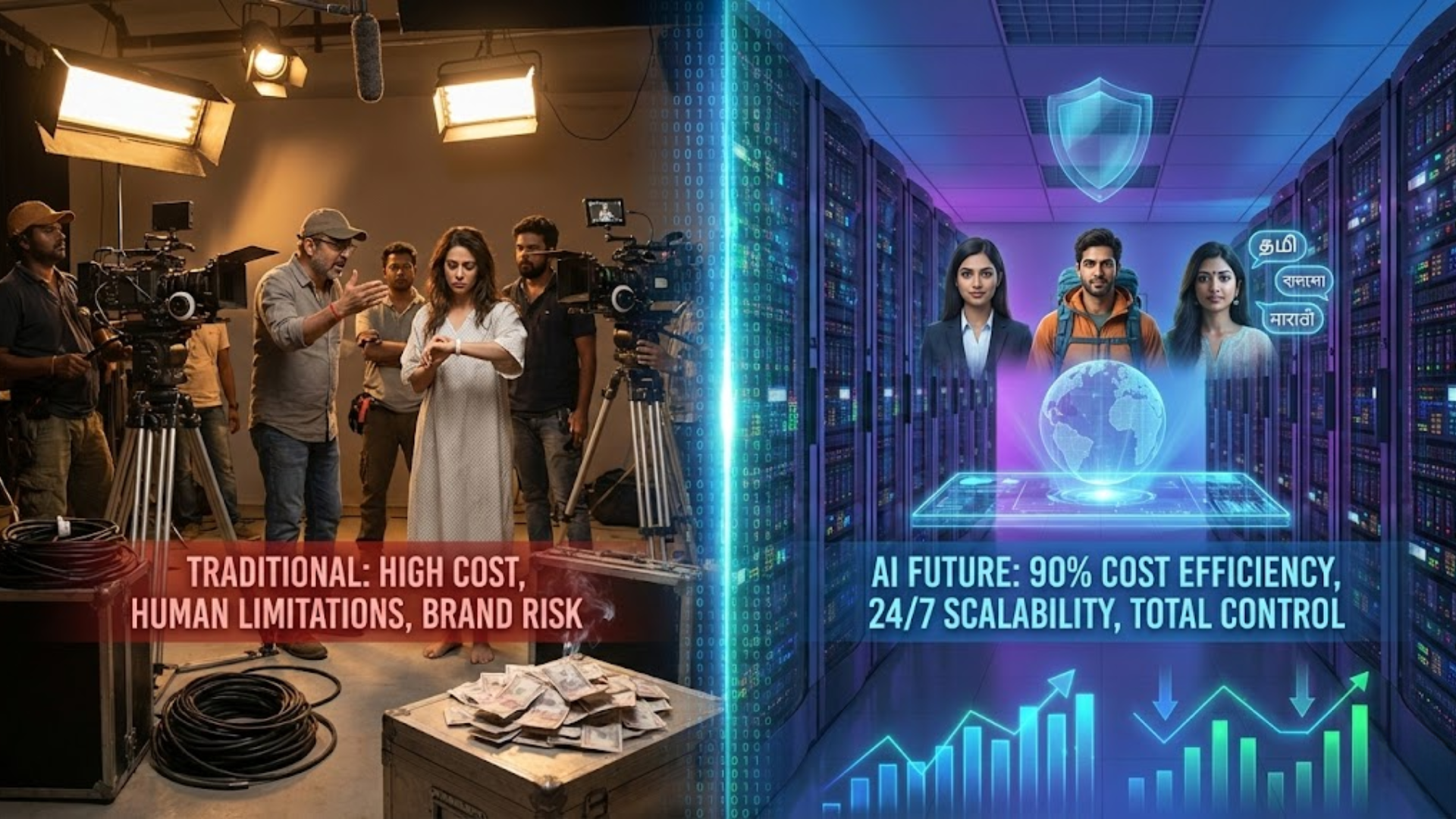
The Business Case: Why Brands Are Switching
To navigate this revolution effectively, talent must understand the motivations of the recruiters. Why are production houses, advertising agencies, and brands leaning toward AI? It is rarely personal against human models. It is almost always an economic and strategic decision.
1. Revolutionary Cost Efficiency
The most compelling argument for AI is the bottom line. A traditional celebrity campaign for a major brand might cost anywhere from ₹2 crore to ₹50 crore. This budget is not just the celebrity’s fee. It includes the photographer, the studio rental, travel for the entire crew to exotic locations, accommodation, makeup artists, hair stylists, lighting technicians, and catering.
In stark contrast, an equivalent campaign using a top-tier AI model can often be executed for ₹10 lakh to ₹20 lakh. This represents a massive reduction in overheads. For a startup or a mid-sized brand, saving 90% of the production budget while getting high-quality output is an irresistible proposition. The “shoot” happens on a server, not a set.
2. Relentless Availability and Scalability
Human models have physical limitations. They get sick. They need sleep. They cannot be in Mumbai, New York, and Paris at the same time. AI models face none of these constraints. A virtual influencer can shoot a winter campaign for the Himalayas and a summer campaign for the Maldives simultaneously. They can work 24/7 without fatigue, allowing brands to churn out content at the speed of social media trends.
This scalability extends to languages. In a linguistically diverse country like India, a human brand ambassador might struggle to speak Tamil, Bengali, Punjabi, and Marathi fluently. An AI model can be programmed to lip-sync and speak in any Indian language with perfect native accentuation, making it the ultimate tool for pan-India marketing campaigns.
3. Absolute Brand Safety and Control
In an era where “cancel culture” can destroy a brand’s reputation overnight, risk management is a priority for advertisers. Human celebrities can have public scandals, controversial opinions, legal troubles, or PR crises that negatively impact the brands they endorse.
Virtual influencers stick exactly to the script. They do not have off-camera meltdowns. They do not make controversial political statements unless programmed to do so. This offers brands total control over their image and messaging, providing a “safe” investment for long-term ambassadorships. The brand owns the narrative completely.
4. Diversity and Hyper-Personalization
AI allows brands to instantly create models that fit specific diversity criteria without the complex logistics of casting. Need a model with a specific skin tone, height, or hair texture for a niche market? An AI artist can generate that exact look in minutes.
Furthermore, AI enables hyper-personalization in e-commerce. Imagine browsing a clothing website and seeing the clothes modeled by someone who has your exact body type, skin tone, and height. AI makes this possible by dynamically generating model images for each user. While this enhances the shopping experience, it significantly reduces the need for hundreds of catalogue models.
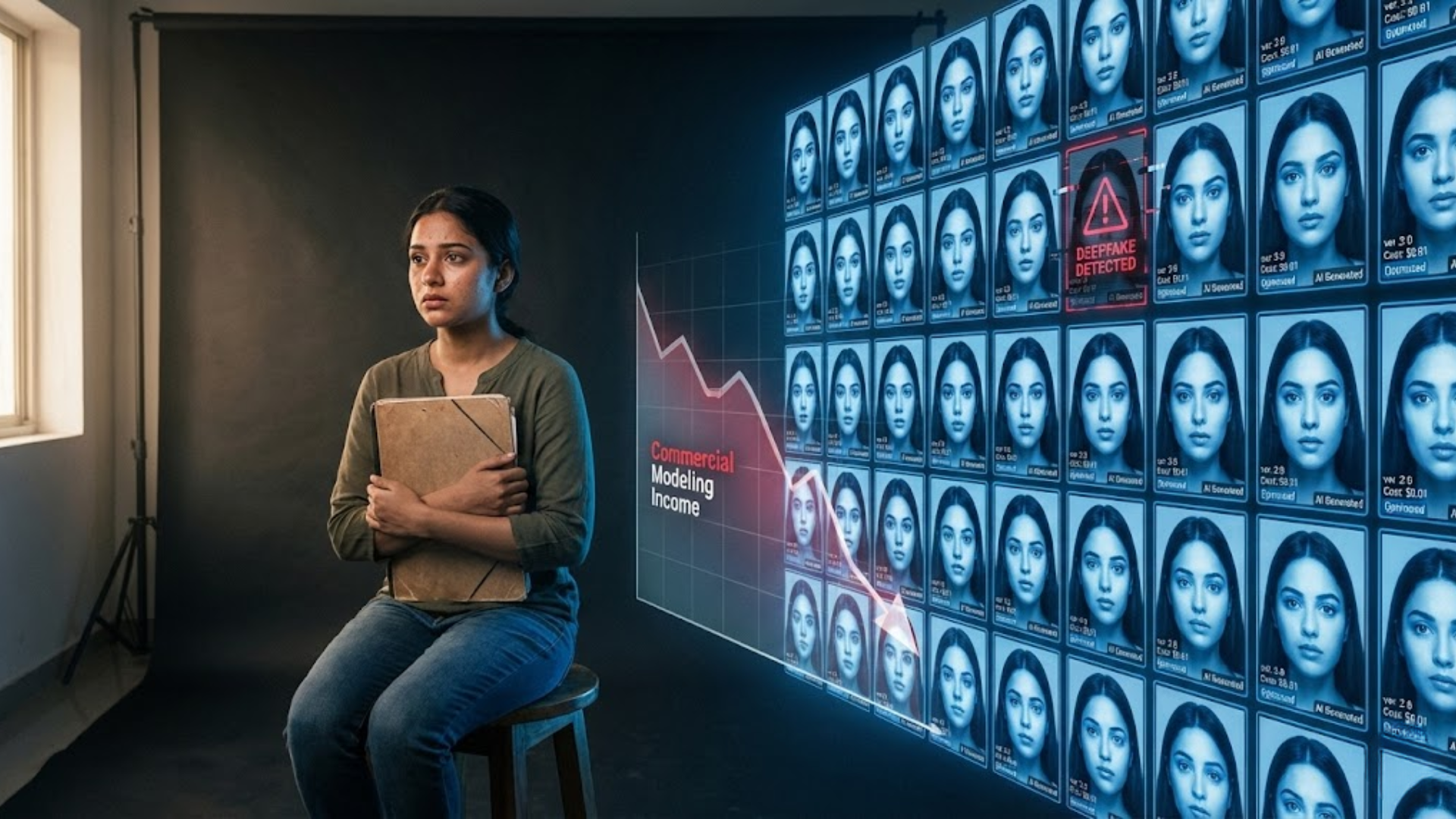
The Human Impact: Challenges for Traditional Models
The rise of AI brings legitimate and serious concerns for human talent. It is important to be realistic about these challenges to prepare for them effectively. Ignoring them will not make them go away.
Income Erosion in the Commercial Sector
The most immediate threat is to the “bread and butter” work of the modeling industry. High-volume catalogue shoots, basic e-commerce listings, and stock photography are the sectors most vulnerable to automation. These are often the entry-level jobs that sustain aspiring models while they build their portfolios.
With AI interactions costing cents per minute compared to the day rates of human professionals, mid-tier modeling jobs are under immense pressure. Aspiring models who rely on these gigs to pay bills are finding the market increasingly competitive. The “middle class” of the modeling world faces a squeeze, even if top supermodels remain unaffected.
The Deepfake Threat and Trust Issues
The technology has a darker side that affects all public figures. The proliferation of deepfake technology means that a model’s likeness can be stolen and used without consent. Celebrities like Arijit Singh, Amitabh Bachchan, Rashmika Mandanna, and Alia Bhatt have recently fought legal battles against unauthorized deepfakes appearing in advertisements and viral videos.
This erodes public trust. If audiences cannot distinguish between what is real and what is synthetic, the value of “authenticity” is challenged. Consumers may become skeptical of all digital content, which can hurt engagement rates for honest influencers and models. It creates an environment of suspicion where every image is questioned.
The Loss of Human Connection
While AI can mimic appearance, it struggles to mimic the soul. The modeling industry has always been about more than just pretty faces. It is about the story, the struggle, and the personality of the individual. When a brand replaces a human with an algorithm, they lose the genuine emotional connection that a real person builds with their audience.
Fans cannot meet an AI model at a fanfest. An AI model cannot sign an autograph or share a genuine hug. This “authenticity gap” is the human model’s greatest asset. Brands that rely solely on AI risk appearing cold and corporate.
Mental Health and Unrealistic Standards
The prevalence of AI models creates an impossible standard of beauty. These digital entities have perfect symmetry, flawless skin without texture, and idealized proportions that defy biology. For human models competing against them, and for the young audiences consuming this content, the mental health toll is significant. It exacerbates body dysmorphia and the pressure to look “filtered” in real life.
Legal Safeguards: Your Rights in the Digital Age
If you are worried about your likeness being used without your permission, you should know that Indian law is evolving rapidly to protect creators. The courts are actively establishing frameworks for Personality Rights that cover the digital realm.
The Constitutional Right to Your Face
Indian courts have increasingly recognized that a person’s voice, image, likeness, and other unique characteristics are protected under Article 21 of the Constitution of India (Right to Life and Personal Liberty). This “Right to Publicity” means that you own the commercial value of your identity. You have the exclusive right to control how your persona is used for profit.
Landmark Precedents and Legal Protections
Several recent high-profile cases have strengthened protections for talent in India:
- The Anil Kapoor Case: The Delhi High Court granted an omnibus injunction restraining the unauthorized use of the actor’s name, image, voice, and even his signature catchphrases like “Jhakaas” for commercial gain, including through AI tools. This set a precedent that your “persona” includes your digital attributes.
- The Arijit Singh Case: The court restrained AI platforms from using the singer’s voice to create new songs or mimicking his vocal style without consent, establishing that “voice cloning” violates personality rights.
- The Amitabh Bachchan Case: The court protected the superstar’s image and voice from being used in lottery scams and fake video calls, reinforcing that even digital simulations of a celebrity require permission.
The Digital Personal Data Protection Act (DPDP), 2023
This new legislation adds another layer of protection. It requires strict consent for processing personal data. Since a high-quality image of a model’s face can be considered biometric data or personal data, unauthorized processing of it to train an AI model could be a violation of this act, carrying hefty penalties.
Key Takeaway for Dazzlerr Models: Your face is your Intellectual Property (IP). Unauthorized use of your likeness for AI training, deepfakes, or commercial content creation is not just unethical. It is legally actionable.
The Future is Hybrid: How to Adapt
The narrative is often framed as “Humans vs. AI,” but the reality of the future is likely “Humans with AI.” The most successful models of the next decade will be those who figure out how to integrate technology into their careers rather than fighting it.
The Rise of “Digital Twins”
Leading global fashion retailers like H&M, Levi’s, and luxury houses are already pioneering the concept of “Digital Twins.” In this model, real human models are scanned to create a high-fidelity digital version of themselves.
Here is how the workflow typically functions:
- The Scan: You go to a studio equipped with a photogrammetry rig. Dozens of cameras capture your body and face from every angle in high resolution.
- The Asset: This scan is processed into a rigged 3D digital asset that looks exactly like you and can be animated.
- The Contract: Crucially, you retain ownership of your digital twin. The contract specifies exactly how, where, and for how long the brand can use it.
- The Passive Income: Brands license your digital twin for campaigns. You get paid whenever the brand uses your twin to model clothes, even if you are sitting at home, sleeping, or working on a completely different film project.
This allows models to “work” in multiple places at once without jet lag or exhaustion. It turns your appearance into a scalable business asset rather than just a service. It transforms a model from a gig worker into an IP owner.
AI as a Creative Assistant
For the independent model, AI is a powerful tool to level the playing field against big agencies.
- Portfolio Enhancement: AI tools can help you retouch images, remove distracting backgrounds, or improve lighting in your portfolio shots (within reasonable ethical limits).
- Content Strategy: Generative AI can help you write engaging captions, research trending hashtags, and plan your social media content calendar.
- Virtual Try-Ons: Models can use virtual try-on technology to see how they look in different styles without buying the clothes, helping them style themselves better for auditions.
- Audition Prep: AI tools can help actors rehearse lines, generate monologues for practice, or even analyze their facial expressions for emotional accuracy.
5 Strategic Steps for Models in 2025
The landscape has changed. To survive and thrive on platforms like Dazzlerr, you need a new strategy. Old methods of simply having a pretty portfolio are no longer enough. Here is your roadmap to future-proofing your career.
1. Build Your “Un-Copyable” Personal Brand
AI can replicate a look. It cannot replicate a soul. Your greatest defense against automation is your personality.
- The Strategy: Do not just post polished, magazine-quality photos. Share your story. Post behind-the-scenes videos of your shoots, such as the bloopers, the waiting, or the makeup process. Talk about your struggles, your diet, your workout routine, and your dreams.
- Why It Works: Emotional connection is the one thing AI struggles to fake. People follow people, not just pixels. When a fan feels they “know” you, they will support the brands you endorse, regardless of whether an AI is cheaper. Authenticity is your moat.
2. Target the Premium and Luxury Markets
Fast fashion and basic commercial catalogues will likely move toward AI automation due to extreme cost pressure. However, luxury brands, high-end editorials, and lifestyle companies still value the prestige of human talent.
- The Strategy: Focus your portfolio on high-quality, editorial-style work. Position yourself as a premium talent. A luxury saree brand or a high-end jewelry line sells “emotion,” “heritage,” and “tradition.” These are concepts deeply rooted in human experience that an AI, born yesterday on a server, cannot authentically convey.
- Action: Collaborate with photographers who have a distinct artistic style that AI cannot easily mimic.
3. Diversify Your Skill Set
Do not just be a mannequin. Be a creator. The industry is moving from “models” to “influencers” to “content creators.”
- The Strategy: Learn video editing, storytelling, styling, or public speaking. If you are an actor, hone your theatre skills. AI is getting good at static images, but it still struggles with the nuances of complex acting, live performance, and physical theatre.
- Why It Works: The more value you add beyond just “looking good,” the harder you are to replace. If you can style the shoot, model for it, and edit the reel afterwards, you are a triple threat that saves the client money in a way AI cannot.
4. Protect Your Rights in Contracts
The boring print in your contract is now the most important part. You must be vigilant.
- The Strategy: When signing contracts with agencies or brands, look for clauses regarding “AI training,” “Digital Simulation,” “Synthesized Media,” or “Perpetual Rights.”
- Action: Ensure you are compensated if your images are used to train an algorithm or if your likeness is used digitally beyond the initial photoshoot. Do not sign away your digital rights for free. Demand specific time limits on the use of your digital likeness.
5. Leverage Dazzlerr’s Trusted Ecosystem
In a world of deepfakes and bots, “Verification” is currency. Recruiters are increasingly wary of fake profiles and scams.
- The Strategy: Use Dazzlerr to your advantage. Ensure your profile is verified. A verified badge on Dazzlerr signals to casting directors that you are a real, vetted human professional.
- Action: Use the Elite Club to network with serious recruiters who value human talent. The platform is designed to bridge the gap between authentic talent and genuine opportunities, providing a layer of trust that the open internet cannot match. Participate in offline events organized by Dazzlerr to build real-world relationships that algorithms cannot disrupt.
Conclusion
The digital revolution is undeniably here. The technology is impressive, the economics are compelling, and the disruption is real. However, the extinction of human modeling is not inevitable.
The industry is evolving into a hybrid ecosystem. There will be room for Kyra and Naina, but there will always be a need for the raw, imperfect, and beautiful reality of human connection. We are not just faces on a screen. We are storytellers. We are dreamers. We are the soul of the industry.
The models who thrive in 2026 and beyond will not be those who fight the technology. They will be the ones who understand it, protect themselves legally, and leverage their unique humanity to offer something no algorithm can ever generate.
Ready to showcase the real you? Update Your Portfolio on Dazzlerr Today and connect with recruiters looking for authentic, verified talent.
Similar Posts