Imagine two creators with the same 20,000 followers. One charges ₹5,000 for a Reel, while the other asks for ₹25,000. At first glance, it seems confusing. Why such a huge difference?
This is one of the most common questions in influencer marketing today. Brands often struggle to decide how much to pay influencer partners, while creators wonder whether they are charging too little or pricing themselves out of opportunities.
As influencer marketing continues to mature in India, understanding influencer rates in India has become essential for both brands and creators. A clear understanding of market pricing enables brands to allocate budgets wisely and allows creators to earn fair compensation for their work.
In this guide, we will explore the latest influencer rates in India trends for 2026, the factors that influence pricing, and practical benchmarks to help both sides negotiate confidently.
What Is Driving Influencer Marketing Growth in India in 2026?
India’s creator economy is expanding rapidly as brands shift more marketing budgets toward influencer campaigns. Nano and micro influencers are gaining popularity due to their strong engagement, while performance-based partnerships are becoming more common.
Instagram and YouTube continue to lead the market, with short-form video driving much of the growth. As a result, influencer rates now depend on factors beyond follower count, including engagement, audience quality, and niche relevance.
Influencer Rates in India 2026 by Follower Tier
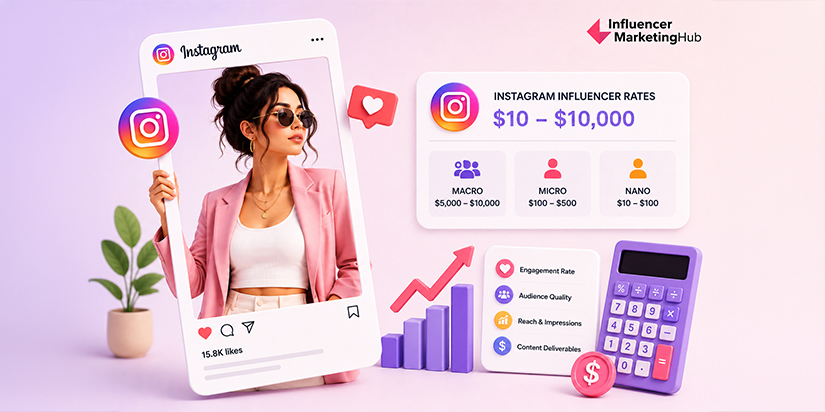
Image Text: Influencer Pricing Tiers
The table below provides estimated pricing benchmarks for sponsored content in India.
| Influencer Tier | Followers | Average Reel Rate | Average Post Rate |
|---|---|---|---|
| Nano | 1K–10K | ₹500–₹5,000 | ₹500–₹3,000 |
| Micro | 10K–100K | ₹5,000–₹25,000 | ₹3,000–₹15,000 |
| Mid-Tier | 100K–500K | ₹25,000–₹1,00,000 | ₹15,000–₹75,000 |
| Macro | 500K–1M | ₹1,00,000–₹3,00,000 | ₹75,000–₹2,00,000 |
| Mega/Celebrity | 1M+ | ₹3,00,000+ | ₹2,00,000+ |
Nano Influencers (1K–10K Followers)
Nano influencers may have smaller audiences, but they often enjoy exceptionally high engagement rates. Their followers tend to view them as relatable and trustworthy, making their recommendations highly influential.
These creators are particularly valuable for startups, local businesses, and niche brands looking for authentic audience connections without large marketing budgets.
Micro Influencers (10K–100K Followers)
Micro influencers are widely considered the most cost-effective category in influencer marketing. They offer a strong combination of reach, engagement, and affordability.
When brands ask how much to pay influencer partners for the best return on investment, micro influencers are often the preferred choice. Their audiences are usually engaged enough to drive meaningful results while remaining accessible from a budget perspective.
Mid-Tier Influencers (100K–500K Followers)
Mid-tier creators provide greater visibility and broader audience reach. They are often experienced in brand collaborations and can support both awareness and engagement-focused campaigns.
Pricing in this category varies significantly depending on niche, audience demographics, content quality, and campaign complexity.
Macro Influencers (500K–1M Followers)
Macro influencers are ideal for brands seeking large-scale exposure. Their substantial reach can help generate awareness quickly and effectively.
However, larger audiences do not always guarantee higher engagement. As a result, negotiations at this level often involve deeper analysis of audience quality, engagement metrics, content deliverables, and usage rights.
Mega and Celebrity Influencers (1M+ Followers)
Mega influencers and celebrities command premium pricing because of their extensive reach and public recognition.
Brands typically engage these creators for major product launches, nationwide campaigns, and large-scale brand awareness initiatives. At this level, influencer rates in India are usually customized based on campaign requirements rather than fixed pricing structures.
Platform-Wise Influencer Pricing
Instagram remains the most popular influencer marketing platform in India. Reels generally attract higher fees because they tend to generate stronger reach and engagement compared to static posts.
Stories are usually more affordable and are commonly used for promotions, product announcements, and limited-time offers.
YouTube
YouTube collaborations often cost more due to the time and resources required for video production. Pricing depends on factors such as video length, average views, niche, audience demographics, and the type of brand integration.
Short-Form Video Platforms
Short-form video content continues to dominate consumer attention. Many creators now offer bundled packages that include content across multiple platforms, giving brands greater flexibility and reach.
LinkedIn influencer marketing has gained significant traction in the B2B space. Industry experts, entrepreneurs, consultants, and business creators often charge premium rates because their audiences are highly targeted and professionally valuable.
What Should Brands Pay Influencers?
There is no single formula for determining how much to pay influencer partners because every campaign has unique goals and requirements. Instead of focusing solely on follower count, brands should evaluate the overall value a creator brings.
Brands should assess:
- Audience engagement rate.
- Content quality and creativity.
- Industry relevance.
- Campaign objectives.
- Content usage rights.
- Exclusivity clauses.
One of the biggest mistakes brands make is selecting creators based solely on the lowest price. Likewise, relying only on follower count can lead to poor campaign outcomes.
What Should Creators Charge?
Creators should evaluate several factors before setting their rates, as pricing should reflect both effort and value delivered.
Creators should evaluate:
- Time invested in content creation.
- Audience trust and loyalty.
- Production costs.
- Market demand.
- Previous campaign performance.
Creators face similar challenges. Charging too little can limit long-term growth, while charging excessively without supporting performance data may discourage potential partnerships.
A solid understanding of current influencer rates India helps creators establish competitive pricing and build sustainable brand partnerships.
Emerging Influencer Pricing Trends in 2026
- Performance-based partnerships are growing, combining fixed fees with incentives tied to results.
- UGC creators are in demand as brands seek authentic content without audience promotion.
- Nano and micro influencers continue to attract more investment due to strong engagement.
- AI-powered tools help brands estimate how much to pay influencer partners using audience and performance data.
Conclusion
Influencer marketing in India now depends on engagement, trust, content quality, and campaign goals, not just follower count.
Knowing current influencer rates in India helps both brands and creators make better deals.
Take your influencer marketing journey a step further with Dazzlerr, a powerful platform where brands discover the right creators and influencers unlock exciting collaboration opportunities, all in one place.
FAQs
1. How are influencer rates calculated in India?
Influencer rates in India are typically determined by factors such as follower count, engagement rate, niche, content format, campaign scope, audience demographics, and content usage rights.
2. What is the average influencer rate in India in 2026?
Rates vary considerably depending on the creator’s size and niche. Nano influencers may charge a few thousand rupees per collaboration, while celebrity influencers can command several lakhs for a single campaign.
3. How much should a brand pay a micro influencer?
Most brands pay micro influencers between ₹5,000 and ₹25,000 per Reel. The final amount depends on engagement levels, audience quality, niche relevance, and campaign objectives.
4. Why do two influencers with similar follower counts charge different rates?
Follower count is only one factor. Differences in engagement rates, audience demographics, content quality, niche expertise, and previous campaign performance can significantly impact pricing.
Similar Posts