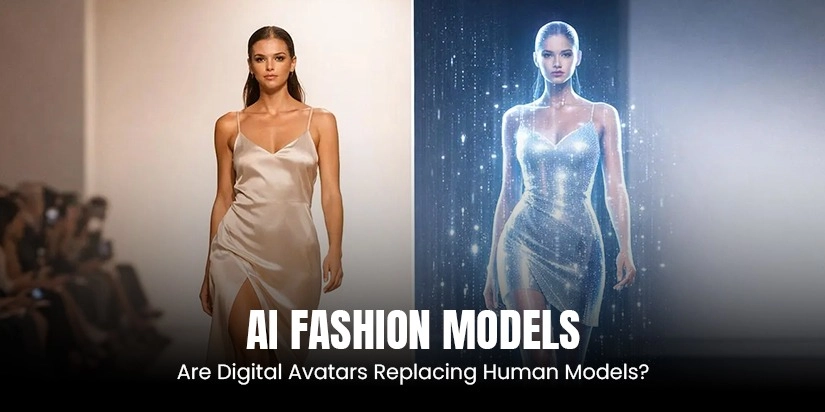
The fashion industry is changing how it creates product images. Brands can now use artificial intelligence to generate models, change outfits, and produce campaign visuals without organising a new photoshoot for every image.
AI fashion models are becoming a practical option for online retailers that need large volumes of visual content. However, this shift also raises concerns about jobs, consent, and the commercial use of a person’s image.
A Reuters investigation published on October 27, 2026, reported that fashion companies are exploring AI-generated imagery to reduce production costs. It also highlighted concerns about digital replicas and the future of modelling work.
Read the Reuters investigation.
The central issue is not just whether AI can create realistic fashion images. It is whether brands can benefit from this technology while protecting models and other creative professionals.
Table of Contents
- What Are AI Fashion Models?
- How AI-Generated Models Are Changing the Fashion Industry
- AI Impact on Fashion Industry Jobs and Workers’ Rights
- How Digital Replicas Affect Fashion Model Rights
- Ethical Concerns Surrounding AI Fashion Models
- AI-Generated Models vs Human Fashion Models
- Will AI Replace Human Fashion Models?
- Conclusion
- FAQs
What Are AI Fashion Models?
AI fashion models are digital representations used to display clothing, accessories, and fashion products. They can be entirely fictional or based on the appearance of a real person.
There are Two Main Types
- Fully Synthetic Models: These are computer-generated characters that do not necessarily represent a specific individual.
- Digital Replicas: These reproduce or modify a real person’s likeness using photographs, scans, or other digital assets.
Both approaches can create fashion images for websites, social media, and advertising campaigns. However, digital replicas raise additional questions about consent and permission.
For example, a retailer could use a synthetic model to display a new collection. Alternatively, it could work with a real model and use AI to generate additional images of that person’s approved digital likeness.
The difference matters. A fictional digital character and a replica of a real person do not carry the same implications for identity rights and compensation.
How AI-Generated Models Are Changing the Fashion Industry
AI-generated models are changing the production process, especially for online retailers that regularly add new products to their catalogues.
A traditional product shoot requires a model, photographer, lighting, styling, and image editing. AI-assisted workflows can automate or reduce some of these steps.
For example, a brand may use an existing product image to create different campaign visuals. It can then review the results and select images that meet its quality standards.
A real-world example comes from SCAYLE Studios, which provides AI-generated imagery for fashion and lifestyle brands. According to Reuters reporting published on October 27, 2026, the business had generated 190,000 outfits in a month for 130 clients.
Its parent company’s operations illustrate how AI image production can scale beyond individual experiments.
Source: Reuters reporting on AI and fashion production.
However, generating an image is not the same as producing an accurate product photograph. AI images still need checks for garment fit, colour, texture, and design details. Otherwise, customers may see something that does not match the item they receive.
Benefits of AI Models for Fashion Brands
The benefits of AI models for fashion brands depend on their products, budgets, and production methods. Four potential advantages stand out.
1. Faster Content Production
AI tools can generate visual variations without requiring a separate physical shoot for every concept. This may help retailers prepare product listings and marketing materials more quickly.
2. Lower Production Costs
Some AI-based workflows can reduce spending on studios, travel, and repeated shoots. Reuters reported potential savings of 90% or more for a particular fashion imagery model. That figure should not be treated as a guaranteed saving for every business.
3. More Flexible Marketing
Brands can test different backgrounds, layouts, and visual concepts. They can also adapt approved creative assets for different advertising formats.
4. More Scalable Product Imagery
Retailers with large inventories can explore AI-assisted production to manage growing image requirements. Human review remains important to ensure that the clothing is represented accurately.
These advantages explain why businesses are experimenting with AI. They do not automatically mean that replacing every human model is the best commercial decision.
AI Models Replacing Human Models: What Is Actually at Risk?
The question of AI models replacing human models is particularly important for commercial modelling, where retailers need frequent product images.
AI can perform some repetitive visual tasks without a person attending every shoot. This may reduce demand for certain assignments, especially where brands prioritise speed, volume, and lower costs.
The potential effects extend beyond models. Photographers, retouchers, stylists, makeup artists, and studio staff may also be affected when companies change how they produce images.
Research from Cornell University’s ILR School has examined these concerns. Its 2025 report, Fashion’s Data Doubles: How AI Is Reshaping Modeling Work, found that generative AI can increase models’ vulnerability to unauthorised image use and contribute to greater employment insecurity.
Read the Cornell ILR School research summary.
Still, it would be inaccurate to claim that all modelling jobs will disappear. Fashion campaigns involve more than static product images. Runway shows, live events, editorial shoots, and campaigns built around human expression continue to offer different creative requirements.
The likely impact will vary by role and business model. Brands that automate routine image production may still need human talent for work that depends on physical performance, personality, and creative interpretation.
AI Impact on Fashion Industry Jobs and Workers’ Rights
The AI impact on fashion industry jobs involves two connected issues: the number of assignments available to workers and the rights attached to their images.
A model may agree to appear in one advertising campaign without expecting their likeness to be reused in hundreds of future images. AI makes it easier to modify and reproduce visual assets, so the scope of that original agreement becomes important.
Contracts should clearly address:
- Whether the model’s likeness can be used to create a digital replica.
- Which campaigns, platforms, and markets are covered.
- How long the brand can use the digital asset.
- Whether additional uses require further compensation.
- Whether the images can be used to train AI systems.
These terms matter because a model’s original payment may not reflect the value of repeated future uses.
The issue is also relevant to photographers and other creative professionals whose work may become part of AI-assisted production workflows.
For a deeper understanding, Cornell’s research explains how existing power imbalances in modelling can make it harder for workers to control the use of their images.
Source: Cornell ILR School, Fashion’s Data Doubles
How Digital Replicas Affect Fashion Model Rights
Digital replicas create a specific challenge, permission to take a photograph does not necessarily mean permission to generate unlimited new images of the person in it.
A digital replica can be used to change clothing, expressions, backgrounds, or other visual elements. Depending on the agreement and applicable law, these changes may require additional permission.
In the United States, New York’s Fashion Workers Act took effect in June 2025. It introduced protections concerning the creation and use of models’ digital replicas, including consent requirements.
The law is specific to New York. It should not be treated as a universal rule for every country or jurisdiction.
Source: Model Alliance, Research on AI and fashion workers.
For brands, a practical approach is to use clear written agreements that define the intended purpose, duration, and scope of digital replica use. Models should understand what they are authorising before signing.
This can help prevent disputes and give both parties a clearer basis for working with AI.
Ethical Concerns Surrounding AI Fashion Models
The ethical concerns surrounding AI fashion models go beyond employment and contracts.
- Unrealistic Body Standards: AI can generate images that do not reflect real human proportions. If brands use these images without care, they may reinforce narrow beauty standards or create misleading expectations about how clothing fits.
- Consumer Transparency: Customers may want to know whether an image shows a real person, a synthetic model, or an AI-modified photograph. Clear disclosures can help maintain trust.
- Unauthorised Image Use: Digital tools can make it easier to alter a person’s appearance or place their likeness in contexts they did not approve.
- Representation and Bias: AI-generated visuals can expand the range of people shown in campaigns, but the results depend on the systems and creative choices involved. Brands should review their images for stereotypes and misleading representations.
- Creative Livelihoods: Reducing production costs may benefit a business while placing financial pressure on the people who previously performed that work. Responsible adoption should consider both outcomes.
These issues do not mean fashion companies must avoid AI. They mean that technical capability should be accompanied by safeguards, clear permissions, and accountability.
AI-Generated Models vs Human Fashion Models
AI-generated models vs human fashion models is not a simple choice between cheaper technology and an outdated method. Each has different strengths.
| Factor | AI-generated models | Human models |
|---|---|---|
| Content production | Can create multiple visual variations | Requires physical participation for new shoots |
| Flexibility | Supports digital changes to styling and backgrounds | Offers real movement and physical interaction |
| Product accuracy | Requires careful review for visual errors | Shows clothing on an actual person |
| Creative expression | Supports digital experimentation | Brings personality, expression, and interpretation |
| Rights and consent | Depends on asset provenance and any likeness used | Requires appropriate image and usage agreements |
| Employment | May reduce some traditional assignments | Provides work for models and related creative teams |
The best choice depends on the purpose of the campaign.
For standardised catalogue images, AI may help a retailer produce content at scale. For runway presentations, luxury editorials, and campaigns that rely on a model’s personality, human participation may remain central.
A hybrid approach is another option. Brands can work with real models and use AI for approved editing, background changes, or campaign variations. This can combine production flexibility with human creativity.
Will AI Replace Human Fashion Models?
Will AI replace human fashion models entirely? Current evidence does not justify a definitive yes or no.
AI is already being used to create fashion imagery, and some businesses are investing in systems designed to reduce production time and costs. At the same time, questions about job displacement, visual accuracy, and digital identity remain unresolved.
The most immediate changes may occur in repetitive commercial image production. Other forms of modelling involve physical movement, live performance, and individual expression, which create different challenges for automation.
The future will also depend on consumer response. If customers find AI imagery misleading or disconnected from the actual product, brands may need to reconsider how they use it.
Rather than treating AI as a complete replacement for people, fashion companies should assess which tasks benefit from automation and where human expertise remains essential.
Conclusion
AI is transforming fashion, making content creation faster and more flexible. For Dazzlerr, the rise of AI fashion models highlights the need to balance innovation with human creativity, fair opportunities, and digital rights.
The future of fashion lies in using AI responsibly while keeping talent at the heart of the industry.
FAQs
1. What are AI fashion models?
They are digitally generated or AI-assisted representations used to showcase fashion products. Some are entirely fictional, while others reproduce the likeness of real people.
2. Are AI models cheaper than human models?
They can reduce some production expenses, especially for high-volume catalogue imagery. However, software, editing, quality control, and licensing costs still need to be considered.
3. Can fashion brands use a model’s digital replica without permission?
The answer depends on the applicable law, contractual terms, and the intended use. Brands should not assume that permission for one photoshoot automatically covers every future digital use.
4. How can fashion models protect their digital identity?
Models can review image-use agreements carefully, ask specific questions about AI-generated replicas, clarify compensation and usage limits, and seek qualified legal advice when necessary.
5. What is the future of AI in fashion?
AI may become more common in catalogue production, advertising, and digital styling. Its long-term role will depend on business results, consumer trust, legal protections, and how effectively brands combine automation with human creativity.
6. How are AI fashion models used by clothing brands?
Fashion brands use AI fashion models to create product catalogue images, digital campaigns, social media content, and virtual styling visuals. These tools can help brands produce content faster and adapt images for different marketing needs.
7. Do AI fashion models affect fashion photographers and stylists?
Yes, AI tools may reduce the need for some traditional photoshoots and editing tasks. However, photographers and stylists can also use AI to support creative work, develop concepts, and improve digital production workflows.
8. Are AI-generated fashion models legally protected?
Legal protection depends on the country, the type of AI-generated content, and whether the model resembles a real person. Copyright, privacy, publicity rights, and contractual rules may apply differently to synthetic characters and digital replicas.
9. Can AI fashion models show clothing accurately?
AI fashion models can create realistic-looking images, but they may distort fabric textures, colours, patterns, or garment fit. Brands should review every image against the actual product before publishing it.
10. Can human models and AI fashion models work together?
Yes, brands can combine real models with AI-assisted editing and digital content creation. This approach can support creative flexibility while retaining human expression, authentic product representation, and professional modelling opportunities.
Similar Posts