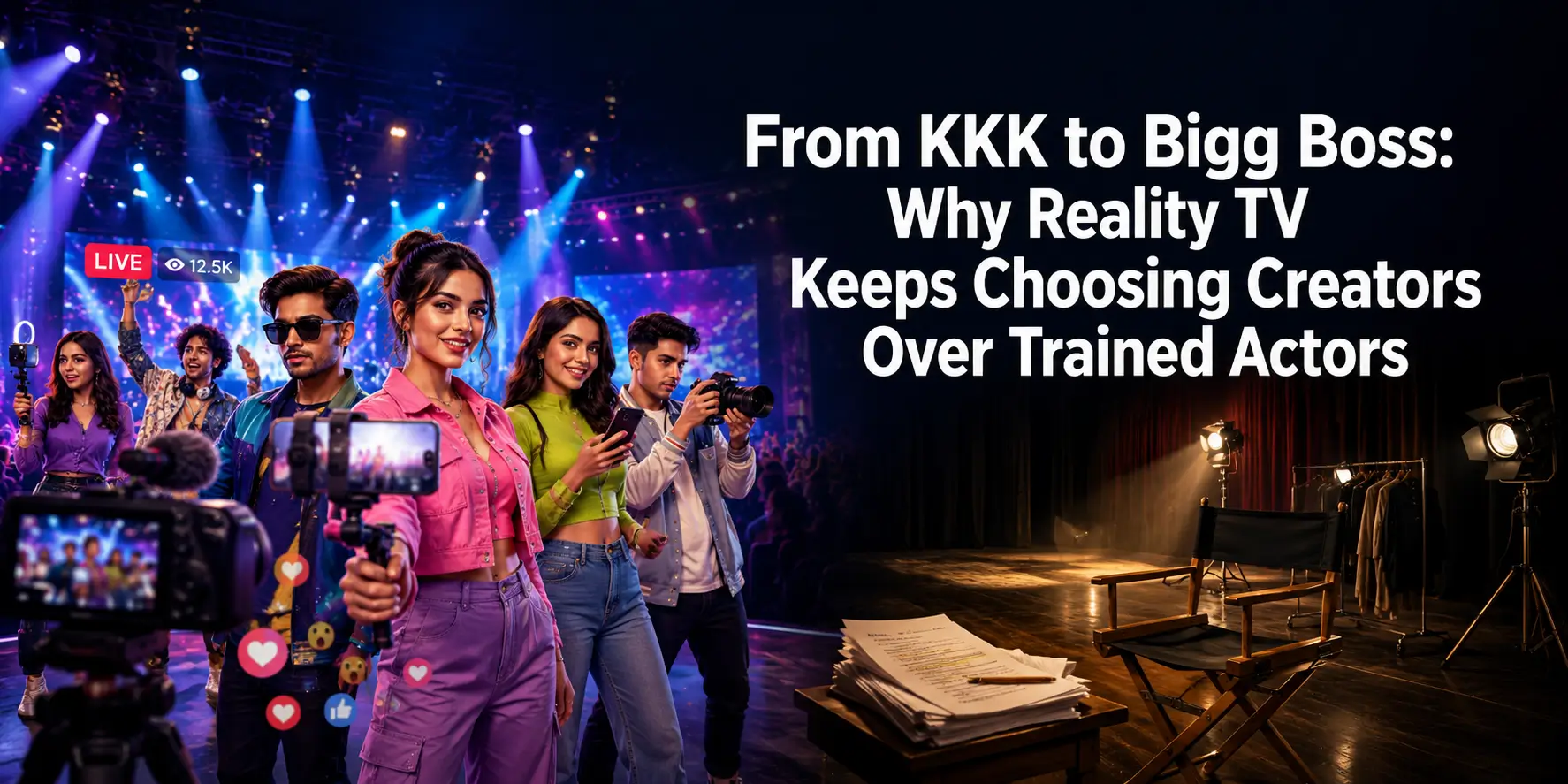
Open the contestant list for any major Indian reality show in 2026, and you’ll notice something: it’s no longer just actors and singers. It’s creators.
Khatron Ke Khiladi 15 — filming in Cape Town, expected to premiere July 25, 2026 — features Orry alongside Gaurav Khanna, Harsh Gujral, Rubina Dilaik, and Jasmin Bhasin. Amazon Prime’s new format show The Alliance has Urfi Javed and Daisy Shah in its cast. And the trend that started with Bigg Boss 19 — where outsider contestant Tanya Mittal walked away with an acting offer from Ekta Kapoor — is only accelerating heading into Bigg Boss 20.
This isn’t a coincidence. It’s a shift in how creators reality TV shows actually cast talent — and it’s worth understanding if you’re trying to build a career as a model, actor, or influencer in 2026, even if right now, nobody outside your friends and family knows your name.
TL;DR:
Reality TV in India isn’t casting the same way it used to. Shows like Khatron Ke Khiladi 15, The Alliance, and Bigg Boss are increasingly filled with social media influencers reality TV audiences already know, Orry, Urfi Javed, Tanya Mittal, instead of only trained actors. But you don’t need to already be famous to benefit from this shift. Casting directors and brands aren’t only searching for big names, they’re searching by category, look, and fit, which means even a creator with 1,000–2,000 followers can get discovered if they’re visible in the right place. That’s exactly where a verified casting network with direct recruiter connect, like Dazzlerr, levels the playing field.
Why Reality TV Keeps Picking Creators
A decade ago, reality shows cast known actors, singers, or people with some entertainment-industry background. That formula has changed for a few clear reasons:
- Built-in audiences drive viewership. A contestant who already has a loyal following brings pre-existing engagement to a show before it even airs.
- Camera comfort is no longer rare. Creators who post daily are already used to performing, reacting, and being watched — skills reality TV depends on.
- Personal brand creates storylines. Producers don’t have to build a persona from scratch; creators already arrive with one.
- Social media extends a show’s life. Every clip, controversy, and moment gets re-shared by the contestant’s own following, multiplying reach for free.
Orry built his presence almost entirely through social media before ever appearing on a reality format. Urfi Javed turned a distinct personal style into consistent visibility across multiple shows. Tanya Mittal came in as a content creator and businesswoman, not a trained actor — and still walked out with a production offer. None of them followed the traditional audition-to-agency path.
What This Means If You’re Trying to Break In
The lesson here isn’t “post content and wait to get cast.” For every creator who lands a reality show offer, there are thousands who don’t, because visibility alone isn’t a strategy. What actually separates the ones who get noticed comes down to a few things:
1. A recognizable personal brand
Producers and casting teams aren’t looking for generic content. They’re looking for a clear identity, something audiences remember and talk about.
2. Consistency, not one viral moment
A single viral reel might get attention for a week. A consistent presence is what makes casting teams actually consider you for a show.
3. Comfort being watched
Reality TV is unscripted and constant. Creators who are already used to being on camera daily have a real advantage here.
4. A professional way to be evaluated
Follower count tells producers reach. It doesn’t tell them anything about range, reliability, or how someone actually comes across on camera — which is exactly what a strong portfolio does.
5. Being visible to the people actually casting
This is where most aspiring talent gets stuck. Great content means very little if it never reaches the casting directors, producers, or brands making the decisions.
The Real Gap: Being Seen vs. Being Found
Here’s what doesn’t get talked about enough: none of these creators got discovered by accident. Someone on a casting team saw their work, evaluated it, and made a decision. Instagram and YouTube are built for audiences, not for casting directors trying to evaluate hundreds of potential contestants efficiently.
This is exactly the gap a verified casting network like Dazzlerr is built to close. Instead of casting teams sifting through unverified profiles and inconsistent portfolios, they can browse verified models, actors, and creators with real project history, filtering by category, experience, and location, the way professional casting actually works.
It also solves a problem most aspiring talent don’t realize is slowing them down: relying on agencies or word-of-mouth to get noticed. Dazzlerr’s direct recruiter connect means your profile is visible directly to the casting directors, producers, and brands actively looking, not sitting in a queue waiting to be forwarded.
Think of it this way: your Instagram is your stage. Dazzlerr is what turns that visibility into an actual audition.
But What If Nobody Knows You Yet?
Here’s the honest question most readers actually have: “Orry, Urfi, Tanya, they were already known. What about someone like me, with 1,000 or 2,000 followers, who nobody has heard of?”
Fair question. And the answer matters more than the celebrity examples above.
Casting directors and brands aren’t only looking for people with millions of followers, they’re looking for specific people who fit a specific need: a certain look, a certain skill, a certain city, a certain vibe. A big following helps get noticed by algorithms. It has almost nothing to do with whether a casting director thinks you’re right for their project.
This is actually good news if you’re just starting out:
- You don’t need to go viral first. Casting decisions are based on portfolios, look, and fit, not follower count. This is where you can create your digital portfolio at Dazzlerr.
- Small creators get cast every day. Most working models, background actors, and brand-collaboration creators in India aren’t celebrities. They’re regular people who got discovered because the right person saw their profile at the right time.
- A 1K-follower creator with a strong portfolio beats a 100K-follower account with no clear identity. Casting directors know the difference between an audience and an actual skill set.
The gap isn’t fame. The gap is visibility to the right people, which is a completely solvable problem, even with zero followers.
How Someone With Zero Fame Actually Gets Started
If you’re not already known, here’s what realistically moves the needle:
1. Build a small, focused portfolio — not a huge following.
A handful of good, clear photos or a short reel that shows range matters more than follower count.
2. Pick a lane
Fashion, fitness, acting, anchoring, modeling, casting directors search by category. Being findable in the right category matters more than being popular in general.
3. Get listed where casting actually happens
This is the part most beginners skip. If your only presence is Instagram, you’re relying on an algorithm to get discovered. A verified casting network puts your profile directly in front of people actively searching for talent like you — regardless of your follower count.
4. Apply consistently, not just once
Getting cast rarely happens on the first try. Creators who land opportunities are usually the ones who stayed visible and kept applying.
Dazzlerr exists specifically for this stage, before the fame, before the big following. It doesn’t matter if you have 800 followers or 8 lakh. What matters is a real, verified profile that casting directors and brands can find through direct recruiter connect, without needing an agency, a connection, or an existing audience to get noticed.
The Bigger Shift
None of this means everyone with a following gets cast on the next big reality show. What it does mean is that the old boundary between “influencer” and “entertainer” barely exists anymore. Reality TV, OTT platforms, and brands are actively scouting casting calls India talent from social media first, which means the opportunity is more open than it’s ever been, for anyone willing to build a professional presence around it.
The real question isn’t whether you have enough followers. It’s whether the people casting for the next big show can actually find you.
Want to be the next name a casting director actually finds? Create your verified profile on Dazzlerr and get discovered by the people casting reality shows, brand campaigns, and auditions right now.
FAQs
Q: Do you need acting experience to get cast in a reality show?
Not necessarily. Many recent reality show contestants came from social media backgrounds with no formal acting training — what mattered more was an established personal brand and camera comfort.
Q: How do casting directors find creators for reality shows?
Increasingly through social media and talent platforms rather than traditional auditions alone. A verified casting network makes this process faster by giving casting teams direct access to evaluated, credible profiles.
Q: What’s the difference between a verified casting network and posting on social media?
Social media builds an audience but wasn’t built for casting evaluation. A verified casting network organizes your portfolio, experience, and credibility in a way casting directors and brands can actually use — with direct recruiter connect so your profile reaches decision-makers without going through multiple agency layers.
Similar Posts