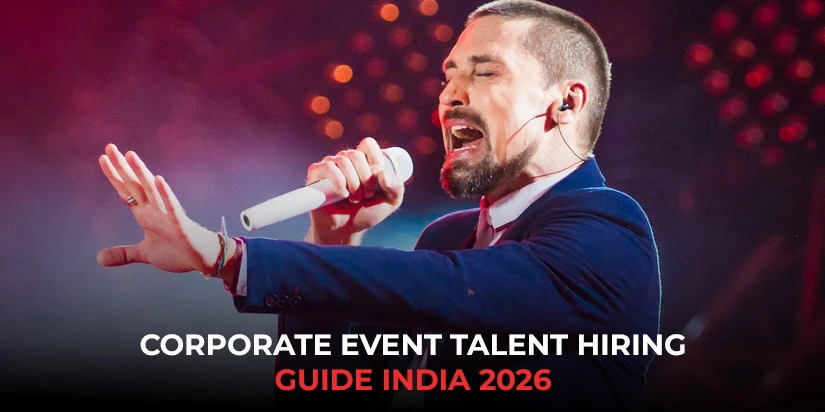
The venue is booked. The guest list is ready. But who will keep the audience engaged?
Finding corporate event talent in India is not just about choosing a popular singer, anchor, comedian, or celebrity. The talent must suit your audience, event format, budget, and schedule.
From host anchor hiring for conferences to celebrity appearances and live performers for annual celebrations, the right choice can shape the entire event experience.
This guide covers what Indian companies should know before hiring corporate event talent in India in 2026, including talent options, costs, verification, contracts, and common hiring mistakes.
Table of Contents
- What Types of Talent Can You Hire for a Corporate Event?
- Which Talent Should You Choose for Different Corporate Events?
- How to Choose Corporate Event Talent in India
- How Much Does Corporate Event Talent Cost in India in 2026?
- What Should You Confirm Before Paying a Booking Advance?
- What Should a Corporate Talent Booking Agreement Include?
- What About Music Licensing for Corporate Events?
- How to Verify Talent Before Booking
- How Early Should You Start Hiring?
- Common Mistakes Companies Make When Hiring Event Talent
- A Practical Corporate Talent Hiring Checklist
- Why Professional Talent Platforms Can Simplify Corporate Hiring
- Final Takeaway
- FAQs
What Types of Talent Can You Hire for a Corporate Event?
Corporate events need different kinds of talent depending on what the audience is expected to do, feel, or remember.
1. Corporate Anchors and Hosts
A professional host keeps the event moving between sessions, performances, awards, speeches, and announcements. For conferences and formal business events, the ability to understand the agenda and communicate clearly can be more important than celebrity recognition.
For annual celebrations and employee events, companies may prefer a host with a more energetic and interactive style.
2. Singers and Live Musicians
Live singers, bands, instrumentalists, and fusion performers can work well for evening celebrations, award nights, and employee gatherings.
Before booking, check whether the performer can adapt the setlist to the audience. A corporate event attended by employees, clients, partners, and senior leadership may require a broader repertoire than a private concert.
3. DJs

Image Source: Magnific
A DJ can be suitable for parties, product launches, after-parties, and informal corporate celebrations.
The important consideration is not simply the DJ’s popularity. Discuss the expected music format, performance duration, equipment requirements, song preferences, and venue restrictions in advance.
4. Dancers and Choreographers
Dance performances can add energy to launches, award ceremonies, cultural celebrations, and themed corporate events.
Companies can also commission performances around a brand, product, campaign, or event theme. In such cases, the choreography, rehearsal schedule, costume requirements, and music should be agreed upon before the booking is confirmed.
5. Comedians and Stand-Up Artists
Comedy can work particularly well at employee engagement events and informal corporate celebrations. However, corporate audiences require additional consideration.
Ask the artist whether the material is suitable for the company’s audience and event setting. Humour involving sensitive subjects, individuals, competitors, or workplace situations should be discussed beforehand.
6. Magicians and Interactive Performers

Image Source: Magnific
Close-up magic, mentalism, interactive acts, and other audience-participation formats can work well when guests are moving around or networking.
These performers can be particularly useful during networking sessions because the entertainment does not always require everyone to remain seated and watch a stage.
7. Celebrities and Influencers
Celebrity appearances can support product launches, award nights, media events, and high-profile corporate celebrations.
However, an appearance and a performance are not necessarily the same thing. A celebrity may be booked for a stage appearance, interaction with guests, a product reveal, a performance, or a combination of these. The exact deliverables should therefore be written into the agreement.
8. Models and Promotional Talent
Models and promotional talent can support exhibitions, launches, experiential activations, and brand events.
For these bookings, companies should clearly define the role, working hours, dress code, number of talent required, usage of photographs or videos, and whether the content will be used only during the event or later for marketing.
Which Talent Should You Choose for Different Corporate Events?
There is no single “best” talent for every corporate event. Start with the objective of the event and then work backwards.
| Corporate Event | Talent That May Fit |
|---|---|
| Annual corporate party | Singer, DJ, comedian, anchor |
| Employee engagement event | Interactive performer, comedian, musician |
| Product launch | Host, celebrity, influencer, models |
| Award ceremony | Professional anchor, singer, performer |
| Conference or summit | Moderator, host, keynote speaker |
| Brand activation | Models, influencers, dancers |
| Dealer or partner meet | Host, musician, comedian, celebrity |
| Formal business gathering | Moderator, professional host, instrumentalist |
The audience matters just as much as the event type. A young employee audience may respond differently to a DJ-led evening than a mixed audience of senior executives, clients, and business partners.
How to Choose Corporate Event Talent in India
Once the event format is clear, evaluate talent against practical requirements rather than popularity alone.
1. Define the Purpose of the Performance
First decide what the talent is expected to achieve. Is the goal to entertain employees, introduce a product, energise a conference, support networking, celebrate an achievement, or create a memorable closing act? This determines the type of performer you need.
2. Consider Your Audience
Look at the age range, professional background, cultural diversity, and interests of the audience. For a pan-India corporate event, the entertainment may need to work across different regional preferences. Language can also matter.
Depending on the audience, Hindi, English, or regional-language capability may influence the choice of host or performer.
3. Check Previous Corporate Experience
A performer who is excellent on stage may not automatically be the right choice for a corporate setting. Ask for relevant examples of previous corporate events. Check whether the talent has experience with conferences, award ceremonies, product launches, employee events, or brand activations similar to yours.
4. Review the Actual Performance Format
Do not evaluate a performer only through photographs or social media popularity. Ask for a recent showreel or performance video. Look at stage presence, audience interaction, communication style, production quality, and how naturally the performer handles live situations.
5. Confirm Location and Travel Requirements
A talent based in Mumbai may be convenient for a Mumbai event but could involve additional travel, accommodation, local transport, and production requirements for an event in Bengaluru, Delhi, Hyderabad, Jaipur, or another city.
Ask for the complete commercial requirement rather than comparing only the headline performance fee.
6. Check Availability Before Finalising the Talent
Popular talent can have several commitments around the same period. Get written confirmation of the event date, call time, performance time, duration, and location.
If the event schedule is still flexible, communicate the possible timings before making the booking.
How Much Does Corporate Event Talent Cost in India in 2026?
Corporate entertainment costs in India vary widely based on the artist, event type, location, performance duration, and requirements. Therefore, there is no fixed industry-wide price list for corporate event talent India. Talent fees can differ substantially based on:
- Artist popularity and professional experience.
- Type and duration of performance.
- Event location.
- Number of performances.
- Event date and availability.
- Travel and accommodation.
- Technical requirements.
- Number of models or performers required
- Rehearsals and customisation.
- Brand usage or promotional rights.
- Celebrity appearance requirements.
For this reason, companies should avoid building a budget around an unverified “standard rate” for a category.
Instead, ask every shortlisted talent for a complete quotation. The quote should make clear what is included and what will be billed separately.
A ₹X lakh performance fee, for example, may not represent the final event cost if travel, accommodation, production, taxes, rehearsals, or additional performance requirements are excluded.
What Should You Confirm Before Paying a Booking Advance?
This is one of the most important stages of hiring corporate event talent in India. A clear booking process helps you verify the talent, avoid last-minute surprises, and ensure every agreed detail is documented before payment.
Before transferring an advance, confirm:
- Legal name of the contracting party.
- Talent or artist being booked.
- Event date and venue.
- Performance duration.
- Number of performances.
- Reporting and call time.
- Total professional fee.
- Applicable taxes.
- Payment schedule.
- Travel and accommodation responsibility.
- Technical requirements.
- Cancellation terms.
- Postponement terms.
- Replacement arrangements in case of unavoidable non-performance.
- Recording and content rights.
- Brand usage permissions.
Do not rely only on WhatsApp messages or verbal commitments for important commercial terms. A written agreement gives both sides a clearer understanding of what has been booked.
What Should a Corporate Talent Booking Agreement Include?

Image Source: Magnific
A professional agreement should describe the booking in enough detail that neither party has to interpret the arrangement later.
1. Performance Details
Mention the exact event date, venue, performance time, duration, number of sets, and expected deliverables.
2. Commercial Terms
Clearly state the agreed fee, advance amount, balance payment date, taxes, reimbursements, and any additional expenses.
3. Travel and Accommodation
If the artist is travelling to another city, specify who is responsible for flights or trains, local transportation, hotel accommodation, meals, and other agreed expenses.
4. Technical Requirements
Some performers may require specific microphones, monitors, instruments, DJ equipment, lighting, stage dimensions, backstage facilities, or sound requirements. These should be shared with the production team early rather than on the event day.
5. Cancellation and Postponement
Corporate events can be postponed because of operational, regulatory, weather, venue, or business reasons. The contract should explain what happens to the advance, balance amount, travel expenses, and talent availability if the event is cancelled or moved.
6. Content and Usage Rights
If the company plans to record the performance, publish clips on social media, use photographs in marketing material, or include the celebrity’s appearance in promotional content, clarify the permitted usage in writing.
A booking to perform at an event does not automatically answer every question about later commercial use of the recorded content.
What About Music Licensing for Corporate Events?
If your event uses copyrighted music, licensing may be required for public performance. IPRS covers music use across events such as corporate functions, award ceremonies, live performances, and DJ events.
Before the event, confirm the applicable licences and responsibilities, especially when using commercial recordings or copyrighted songs.
How to Verify Talent Before Booking
A strong portfolio is useful, but verification should go further. Check recent work, corporate event experience, professional representation, and booking terms before making a commitment.
1. Check the Professional Profile
Look for consistent information about the artist’s work, location, previous performances, and professional representation.
2. Request Recent Work
Ask for recent performance footage instead of relying entirely on older promotional videos.
3. Verify the Booking Contact
If an agency, manager, or representative is handling the booking, confirm who is authorised to represent the talent and who will issue the invoice or agreement.
4. Confirm the Commercial Details
Make sure the quotation, payment instructions, contract, and tax details correspond to the actual booking party.
5. Avoid Last-Minute Payment Changes
If bank details suddenly change through an informal message, verify the change through an established contact channel before making payment.
How Early Should You Start Hiring?
There is no universal booking window because availability depends on the talent, event season, city, and event type.
However, companies should not wait until the final days before the event to shortlist performers.
Start Early Enough To:
- Define the event requirements.
- Shortlist suitable talent.
- Check availability.
- Compare portfolios and quotations.
- Confirm technical requirements.
- Complete commercial negotiations.
- Sign the agreement.
- Coordinate rehearsals and production.
The earlier stages become particularly important for celebrity appearances, customised performances, large artist teams, or events involving intercity travel.
Common Mistakes Companies Make When Hiring Event Talent
1. Choosing Popularity Over Suitability
A famous performer may attract attention but still be unsuitable for the audience or event objective.
2. Comparing Only the Performance Fee
The lowest quoted fee may not be the lowest overall cost. Travel, accommodation, technical requirements, taxes, rehearsals, and additional deliverables can change the final amount.
3. Ignoring the Event Schedule
A performance that is too long, too late, or poorly placed in the agenda can affect the overall flow of the event.
4. Not Discussing Content Rights
Recording an event and using the footage later for advertising or social media may involve rights that should be addressed separately.
5. Leaving Technical Planning Until the Event Day
Sound, lighting, stage setup, microphones, instruments, and backstage requirements should be coordinated with the production team beforehand.
6. Booking Without Clear Cancellation Terms
Corporate schedules can change. The agreement should explain the financial consequences of cancellation or postponement before the booking is confirmed.
A Practical Corporate Talent Hiring Checklist
Before confirming hiring of corporate event talent India, use this checklist to ensure the costs, contracts, and event requirements are properly aligned. A quick final check can help prevent last-minute issues on the event day.
Event
- Event objective defined.
- Audience profile identified.
- Venue and city confirmed.
- Event date and schedule confirmed.
Talent
- Relevant experience checked.
- Recent showreel reviewed.
- Performance format confirmed.
- Availability verified.
Commercials
- Complete quotation received.
- Taxes clarified.
- Travel and accommodation clarified.
- Advance and balance payment terms agreed.
Contract
- Performance details documented.
- Cancellation terms included.
- Postponement terms included.
- Content and usage rights clarified.
- Technical requirements attached.
Event Operations
- Production team briefed.
- Sound and lighting requirements confirmed.
- Artist arrival and reporting time confirmed.
- Rehearsal requirements planned.
- Music licensing requirements checked.
Why Professional Talent Platforms Can Simplify Corporate Hiring
Finding individual performers through scattered social profiles can take considerable time. Companies may have to compare portfolios, verify availability, communicate with representatives, and coordinate commercial terms separately.
A professional talent platform can make the discovery stage more organised by bringing different categories of talent into one place.
This can be particularly useful when an event requires several profiles, such as an anchor, models, dancers, musicians, or influencers.
For companies, the objective should not simply be to find a performer quickly. It should be to find someone whose skills, experience, availability, and commercial terms align with the event.
Final Takeaway
Successful corporate entertainment starts with choosing talent that fits the audience, event objective, brand, venue, schedule, and budget.
A structured hiring process also helps confirm costs, technical needs, contracts, travel, cancellation terms, content rights, and licensing requirements. With the right planning, corporate event talent India can contribute to a professional and engaging event.
Dazzlerr helps businesses find and connect with professional talent across categories, making it easier to shortlist the right talent for corporate events in India.
FAQs
1. Can corporate event talent customize a performance for our company?
Yes. Some performers can customize their content, language, music, or performance around a company’s theme, campaign, industry, or event message. Discuss the requirements before booking.
2. Can I hire talent for a corporate event in a smaller Indian city?
Yes. Talent can be arranged for events outside major metros, although travel, accommodation, and logistics may affect the overall booking requirements.
3. Can one person handle both hosting and entertainment at a corporate event?
Yes. Some professional anchors or emcees can combine event hosting with audience interaction or entertainment. Confirm their specific capabilities before booking.
4. Can I request a performer who speaks a specific Indian language?
Yes. Language preferences can be included in the initial talent brief, particularly for events with regional audiences. This helps narrow the shortlist to performers who can communicate comfortably with the audience.
5. Can corporate event talent perform at multiple locations during the same event?
This depends on the artist’s schedule, travel time, and agreed performance terms. If multiple venues are involved, mention every location when requesting availability and pricing.
6. Can an artist be booked through an agency instead of directly?
Yes. Artists may be represented by managers, agencies, or authorised representatives. Before making payment, confirm who is authorised to handle the booking and ensure the final terms are documented in writing.
Similar Events