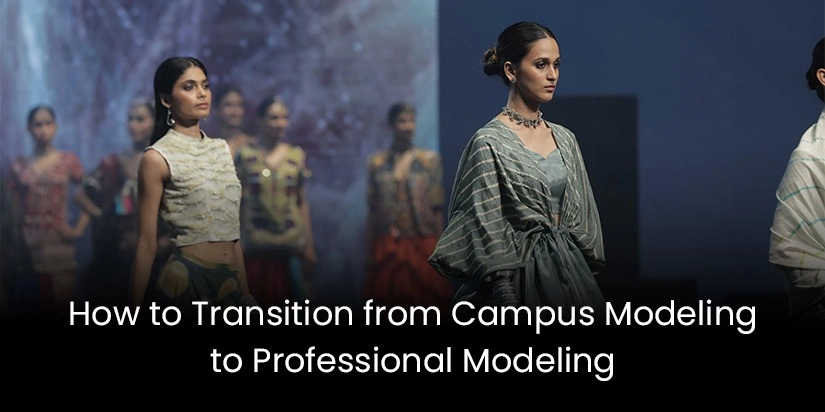
Your first ramp walk at a college fashion show might earn you applause from hundreds of students. A few photographs from the event may even bring compliments and attention on social media.
But what happens when you want to take that experience beyond your college walls and work with fashion brands, photographers, designers and professional casting teams?
Moving from campus modeling to the professional industry involves more than getting better photographs or walking confidently on a runway. You need to understand how the industry works, prepare a portfolio that meets professional expectations and learn how to approach genuine opportunities.
For anyone planning a career as a campus model in India has several entry points through college fashion shows, talent competitions, photography projects and casting platforms. The challenge is knowing how to turn these early experiences into opportunities that can support a long-term modeling career.
Table of Contents
Campus Modeling vs Professional Modeling: What Actually Changes?
Campus modeling offers an introduction to the fashion and entertainment industry. Students participate in college festivals, fashion competitions, promotional events and photoshoots. These experiences help them become comfortable in front of an audience and understand basic presentations.
Professional modeling, however, involves a different level of preparation and responsibility.
| Aspect | Campus Modeling | Professional Modeling |
|---|---|---|
| Opportunities | College festivals and competitions | Brand campaigns, fashion shows and commercial shoots |
| Selection | College auditions and event selections | Agency shortlists and client castings |
| Portfolio | Event photographs and casual pictures | Professional photographs and digitals |
| Expectations | Participation and stage presentation | Consistency, versatility and professionalism |
| Work environment | College events and student projects | Studios, production houses and fashion assignments |
One important difference is that professional clients select models according to specific project requirements. A brand looking for a commercial model may prioritise expressions and the ability to communicate a product’s appeal, while a fashion designer may focus more on runway presentation.
Understanding these differences helps you prepare for the transition instead of relying only on your college achievements.
Identify Your Modeling Category and Assess Your Readiness
Before approaching agencies or attending auditions, decide which direction you want to pursue. Modeling is not limited to runway shows, and different categories require different strengths.
Some common options include:
- Fashion Modeling: Working with designers, fashion labels and clothing brands for campaigns and runway shows.
- Commercial Modeling: Appearing in advertisements, product promotions and brand campaigns.
- Editorial Modeling: Participating in creative fashion shoots for magazines and visual publications.
- Catalogue Modeling: Presenting clothing, accessories and other products for ecommerce and print catalogues.
- Fitness Modeling: Working on fitness campaigns, sportswear promotions and wellness-related projects.
Your college experience can help you identify where your strengths lie. For instance, if you enjoyed presenting outfits during fashion shows, runway modeling might interest you. If you were more comfortable posing during photoshoots, commercial or editorial assignments could be worth considering.
Also, assess your ability to take instructions, adapt to different concepts and remain comfortable in front of unfamiliar teams. These qualities matter when moving from college to professional model opportunities.
Build a Professional Modeling Portfolio Beyond College Photos
Your college fashion show photographs may capture memorable moments, but they do not necessarily demonstrate everything a professional casting team needs to evaluate.
A modeling portfolio should present your appearance, expressions and ability to work with different visual styles.
Start with these essential photographs:
- Headshots: Clear photographs showing your face and natural expressions without heavy editing.
- Full-Length Photographs: Images that present your overall appearance and proportions.
- Profile Shots: Front and side-angle photographs that provide a better understanding of your features.
- Natural Digitals: Simple, unedited photographs taken in good lighting, usually against a plain background.
- Creative Photographs: Selected images showing your ability to adapt to different styling, outfits and concepts.
You do not need an expensive portfolio from the beginning. A few well-lit, clear and recent photographs can help you make your first submissions.
Avoid adding too many similar images. Casting professionals should be able to understand your appearance and range without going through dozens of repetitive photographs.
Find Modeling Agencies and Professional Casting Opportunities
Once your portfolio is ready, the next step is finding opportunities that match your modeling category. Start by researching modeling agencies, casting platforms, production houses and brands that regularly work with new talent.
Check their previous projects, professional presence and submission requirements before applying.
When submitting your portfolio, include:
- Your name and current location.
- Recent photographs and digitals.
- Height and other relevant measurements, where requested.
- Previous modeling experience, including college events.
- Contact details and preferred modeling category.
If you are searching for college to professional model opportunities, do not limit yourself to traditional modeling agencies. Independent casting calls, commercial campaigns, catalogue shoots and fashion projects can also provide useful industry exposure.
Be careful when evaluating opportunities. Genuine casting processes should clearly explain the project, selection requirements and payment arrangements.
Avoid anyone promising guaranteed roles in exchange for large registration or portfolio fees. Never share sensitive identity or financial information with unverified contacts.
Develop the Skills Required for Professional Modeling
A strong portfolio can help you get noticed, but your performance during an audition or photoshoot determines how effectively you meet the client’s requirements.
Focus on developing these practical skills:
- Runway Walking and Posture: Practice maintaining balance, controlled movements and a confident walk. Record yourself to identify areas that need improvement.
- Posing and expressions: Learn how small changes in posture, facial expressions and body angles can affect a photograph.
- Following creative direction: Photographers and creative directors may ask you to change expressions, positions or movements repeatedly. Being adaptable makes the process easier.
- Professional communication: Respond to messages clearly, arrive on time and understand the assignment before accepting it.
- Consistency: Regular practice helps you maintain confidence across different auditions, photographers and working environments.
You can practise these skills through test shoots, workshops and small creative projects. The objective is not to copy another model’s style but to become comfortable presenting yourself in different professional settings.
How to Secure Your First Professional Modeling Assignment
Getting shortlisted is an important step, but it does not automatically mean you have secured the assignment. Professional casting usually involves several stages.
- Understand the Casting Brief: Read the project details carefully. Check the required appearance, clothing, role, location and schedule.
- Prepare for the Audition: Carry your portfolio or keep digital copies ready. Practise introducing yourself and follow the instructions provided by the casting team.
- Be Prepared for Callbacks: Some projects require additional auditions, screen tests or test photographs before making a final selection.
- Understand the Agreement: Before accepting an assignment, clarify the payment, working hours, travel arrangements and image usage rights. Check where and how long the client can use your photographs or videos.
- Learn from Rejection: Casting decisions depend on the project’s specific requirements. Not getting selected does not necessarily reflect your ability or potential.
Your first assignment may be a small catalogue shoot or a local brand campaign rather than a major fashion show. Such projects can help you understand professional workflows and build relevant experience.
A Practical 90-Day Roadmap from Campus Modeling to Professional Modeling
Instead of applying randomly to every available opportunity, follow a structured preparation plan.
| Timeline | What to Focus On |
|---|---|
| Days 1–30 | Identify your modeling category, assess your skills and prepare natural digitals and portfolio photographs. |
| Days 31–60 | Research agencies, create casting profiles, submit applications and attend relevant auditions. |
| Days 61–90 | Follow up on suitable opportunities, attend callbacks and pursue assignments that match your experience. |
Keep track of the opportunities you apply for, submission dates and responses. This makes it easier to identify which applications are generating interest and where your portfolio needs improvement.
Remember, 90 days is a preparation framework, not a promise of getting selected. Building professional relationships and gaining consistent assignments can take longer.
How Dazzlerr Can Help You Move Towards Professional Modeling
The journey from college events to professional assignments becomes easier when aspiring models have access to relevant industry opportunities.
Dazzlerr provides a platform where emerging talent can create profiles, showcase portfolios and look for casting opportunities. For someone who has participated in college fashion shows but has limited professional exposure, this can be a useful way to present their experience beyond their campus network.
A well-maintained profile, recent photographs and accurate information can help casting professionals understand your potential. You can also keep looking for opportunities that match your interests and experience.
The goal is to make your transition from a campus model in India to a professional talent more structured by combining your existing experience with better industry visibility.
FAQs
1. Can campus modeling experience help me become a professional model?
Yes. Campus modeling can help you develop stage confidence, posing skills and an understanding of fashion presentations. However, you will still need a suitable portfolio, professional preparation and exposure to industry auditions.
2. How do I get my first professional modeling assignment in India?
Prepare recent photographs, identify your modeling category and approach legitimate agencies or casting platforms. Apply for suitable projects and follow the submission instructions carefully.
3. Do modeling agencies accept college students?
Yes. Some agencies and casting professionals consider college students, including beginners without professional experience. Selection depends on the project’s requirements and the applicant’s suitability.
4. Can I become a model without professional photoshoot experience?
Yes. You can begin with clear natural photographs and digitals. Professional portfolio shoots can be added as you gain experience and understand the type of modeling work you want to pursue.
5. What should a beginner modeling portfolio include?
A beginner’s portfolio should include clear headshots, full-length photographs, profile shots and natural digitals. A few creative images can also demonstrate versatility.
6. Where can I find legitimate modeling auditions in India?
You can check established modeling agencies, verified casting platforms, production companies and brand casting announcements. Always verify the organiser and assignment details before participating.
7. How long does it take to become a professional model?
There is no fixed timeline. It depends on your preparation, modeling category, portfolio quality, casting opportunities and ability to meet client requirements.
8. Can I pursue professional modeling while studying in college?
Yes. Many aspiring models begin attending auditions and taking small assignments while completing their education. Managing schedules and choosing suitable projects can help balance both commitments.
Similar Posts